

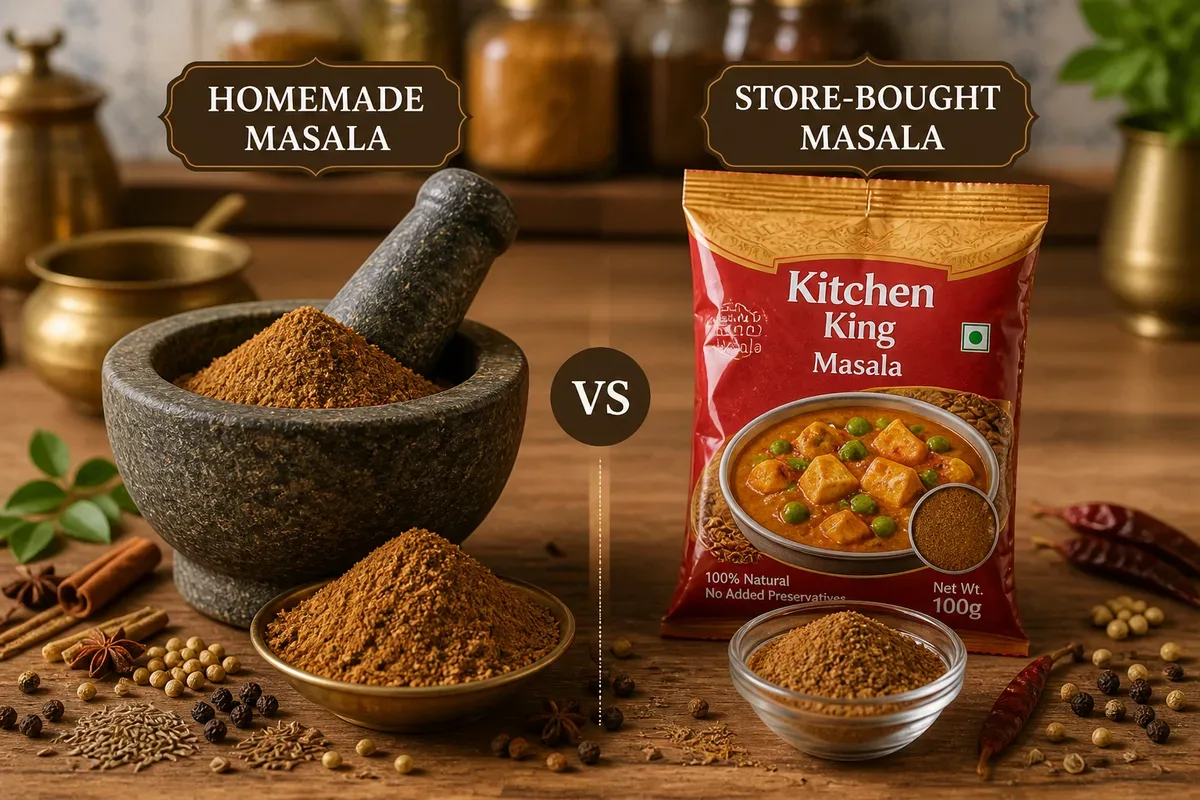
Walk down any supermarket aisle and you will find dozens of sambar powders, rasam mixes, and chutney blends. The labels look similar. The prices vary wildly. So what should a careful cook actually look for?
The first difference is roasting. Authentic Karnataka masala powders begin with whole spices toasted slowly until fragrant — coriander seeds popping, red chillies deepening in colour, curry leaves crisping at the edges. This step unlocks essential oils that pre-ground supermarket blends often lose during industrial processing.
The second difference is freshness. Spices are agricultural products with a shelf life. Powders sitting in warehouses for months taste dusty, no matter how attractive the packaging. Small-batch production — the kind done in home kitchens and at SuVika Harvest — means shorter supply chains and brighter flavour on your plate.
The third difference is balance. A good sambar powder is not just hot; it is layered — tangy potential from tamarind-friendly spice ratios, earthy depth from roasted dals, and a finish of curry leaf aroma. Rasam powder should lean peppery and light. Puliyogare powder needs sesame warmth and tamarind brightness in equal measure.
Reading ingredient lists matters. Avoid blends with excessive fillers, artificial colours, or undeclared sodium levels. Look for short, recognisable ingredient lists and transparent sourcing.
You do not need to grind everything from scratch to eat well. You need powders made with the same care you would use at home — roasted patiently, ground cleanly, and packed while still aromatic. That is the standard we hold every SuVika Harvest masala to.